
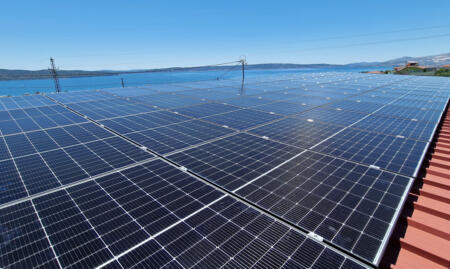
Investing in solar panels is becoming increasingly popular as a way to reduce energy costs and contribute to a sustainable future. However, before making this investment, it is essential to understand the necessary conditions for a successful installation. Key aspects such as roof type, orientation, tilt, equipment selection, and other factors affect the efficiency of solar panels.
One of the first steps in considering solar panel installation is assessing the type of roof. There are two main types of roofs suitable for installation:
Flat Roofs: Flat roofs offer flexibility in installation. Various mounting systems can be used to optimize panel orientation and tilt. This type of roof is often ideal for commercial buildings, where a larger number of panels can be installed.
Sloped Roofs: Sloped roofs are the most commonly used for residential buildings. Ideally, roofs should have a tilt between 15° and 40°, allowing optimal sunlight absorption. In the case of a sloped roof, it is crucial to position the panels facing south, southwest, or southeast for maximum sun exposure. Metal roofs can simplify installation due to their durability and longevity.
The optimal orientation of solar panels is crucial for their efficiency. As a general rule, panels should be oriented southward (in the northern hemisphere) to maximize solar energy utilization. However, west and east orientations can also be highly effective. Regarding tilt, the ideal angle may vary depending on geographic location. Generally, the tilt angle should be approximately equal to the latitude of the location. For example, if you are at 40° north latitude, the optimal panel tilt should be around 40°. These factors play a key role in the overall efficiency of the system.
Before installation, it is essential to evaluate the amount of sunlight available. Consider surrounding buildings, trees, and other obstacles that may shade the panels throughout the day. If panels are in the shade, their efficiency may decrease. Assessing the sun exposure of your roof is a crucial part of project planning.
Once solar panels are installed, system maintenance should be taken into account. Solar panels require minimal maintenance, but regular cleaning and inspections can help maintain their efficiency. Users can monitor system performance through an intuitive mobile app that provides real-time operational insights. This feature ensures that all system components function seamlessly.
Installing solar panels can be a significant step toward reducing energy costs and contributing to sustainable development. Understanding key factors such as roof type, orientation, and tilt is essential for making an informed decision about installing a solar power system. Investing in solar panels will not only lead to cost savings but also integrate you into the global movement toward renewable energy.
 + 385 99 555 1511
 info@suncozor.hr


